
Ewa Gentry Resident Eras
The useful source depends on the date. Modern Ewa Gentry house history starts with a current TMK, assessment profile, and permit file. The deed chain can reach much farther, while older directory, census, probate, newspaper, and survey records may describe the broader Ewa locality rather than today's subdivision. Each row below answers a different part of “who lived here before.”
| Source | Years It Covers | Where Held | What It Shows |
|---|---|---|---|
| BOC land records | Post-1976 online; older routes available | Bureau of Conveyances | Recorded parties, instruments, legal descriptions |
| Grantor/grantee index | 1845–1916 | FamilySearch / original BOC records | Names, deed type, date, book and page |
| Honolulu and island directories | 1880–81 onward; island series 1954–1987 | UH H&P, HSPLS, HSA, selected scans | Dated names, addresses, work and household clues |
| Census and tax lists | Oʻahu lists 1840–1866 and released censuses | HSA, UH, library databases | Household and historical locality evidence |
| DPP permit files | Modern summaries and older office files | Honolulu DPP / DAIB | Construction, alteration, address, and applicant chronology |
Use recent records to identify the land first. For a period before the subdivision, let the original map, deed, and directory labels stand. A broad “Ewa” entry is not automatically the modern parcel.
The timeline should also separate ownership from occupancy. A deed can prove a recorded transfer, while a directory can place a listed person at an address in one edition. A permit dates work and may name an applicant. A census describes a household within its released schedule and district. Two sources that agree on name, place, and date produce a stronger previous-resident finding than either source alone.
Ewa Gentry Parcel Records
Enter the exact situs address in Honolulu RPAD/QPublic, copy the TMK, then confirm the parcel shape in HoLIS. Record the assessed owner exactly as displayed, but label it as assessment data. A trust, estate, entity, joint owner, or update lag can prevent a neat person-to-house match. The tax mailing address may also be outside Ewa Gentry.
The current parcel anchors older evidence because a TMK and legal description are more durable than postal wording. If the lot was divided, combined, converted to a condominium property regime, or addressed after construction, preserve each change instead of forcing one street line across the full timeline.
For current address-keyed tools in depth, the Ewa Gentry street directory explains the parcel and permit fields without rebuilding the historic chain.
Ewa Gentry Deed Records
The Hawaiʻi Bureau of Conveyances public research route is the core ownership trail. It records statewide Regular System and Land Court instruments rather than a separate Honolulu County deed book. Search from the current assessed owner, inspect the actual purchase deed, and use its legal description and prior-instrument reference to confirm the parcel before moving back another transfer.
- Copy the current owner, TMK, and legal description from the parcel profile.
- Find that owner's acquisition deed and verify the lot, block, tract, or TMK.
- Take the seller, the grantor, and search that person or entity as an earlier grantee.
- Repeat while recording system, instrument type, recording number, date, and prior reference.
- For pre-1976 or complex work, use BOC's reference room or written search request.
- Grantor / grantee
- The grantor gives or sells an interest; the grantee receives it.
- Chain of title
- The linked sequence of recorded transfers for the same land.
- Legal description
- The deed's formal land wording, which can identify a parcel even when a street address changes.
The current BOC FAQ says post-1976 documents are online. Older pages describe other cutoffs, so confirm the route before paying. Search is free, images are purchased, and copies are listed at $1 per page.
The BOC research page shows the official public-access starting point.
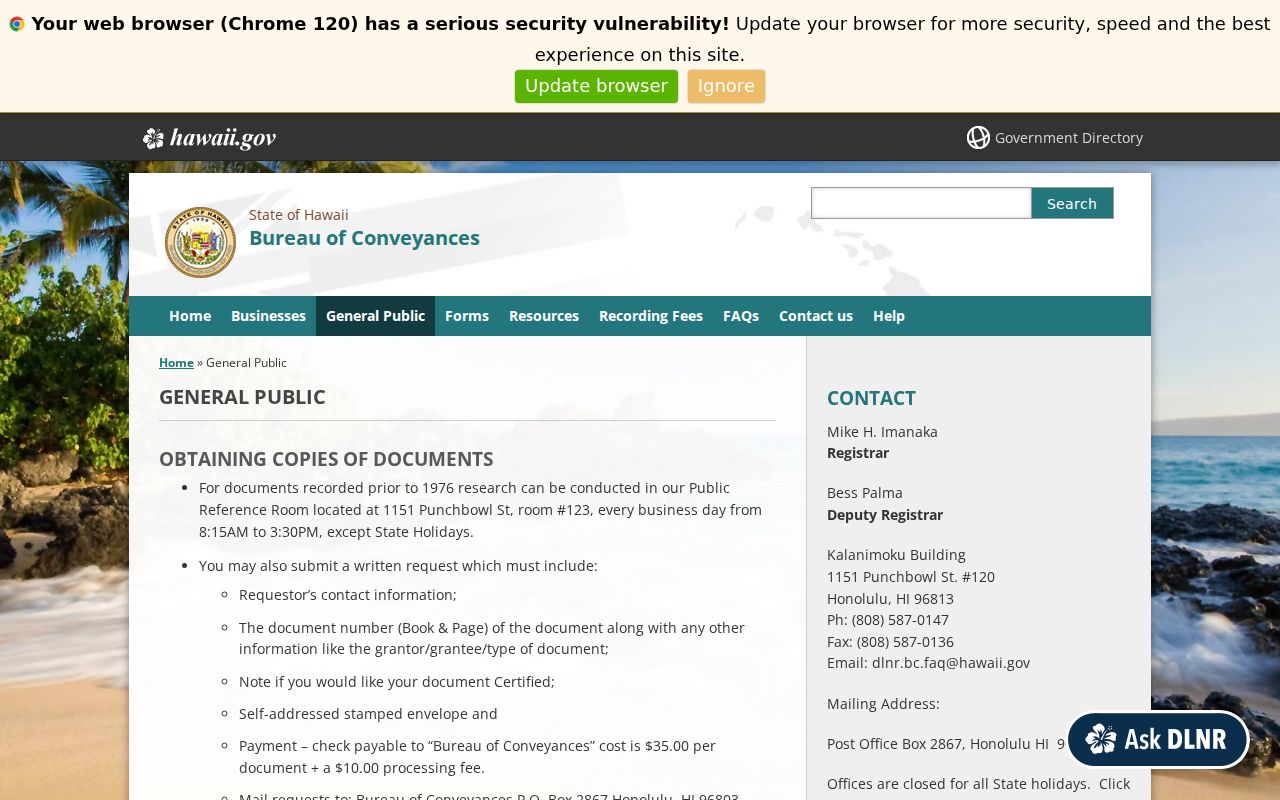
Its online, room, and request channels keep the trail moving when an old instrument is not downloadable.
Ewa Gentry’s 1845 Index
The established Hawaiʻi Grantor and Grantee Index covers 1845–1916 and can supply the grantor, grantee, deed type, date, book, and page. It is an index tied to original Bureau of Conveyances records, not a substitute for reading the deed. The broad Ewa place name and historical land description need to match before a person is attached to a modern site.
BOC number formats also change by era. Older research may use liber or book and page, later records use year-plus-document forms, and recent records use longer numeric formats. Preserve the number as printed. A reformatted guess can lead to the wrong instrument.
Ewa Gentry Permit Records
Honolulu DPP permit records can establish construction, alteration, address assignment, approval, and review chronology. Search by permit number or TMK. If only a summary appears, contact DAIB for the older file using both the parcel key and street address. An applicant may be an owner, designer, contractor, or other filer, so the name does not prove residence.
The DPP records contacts identify the office route for permit files.
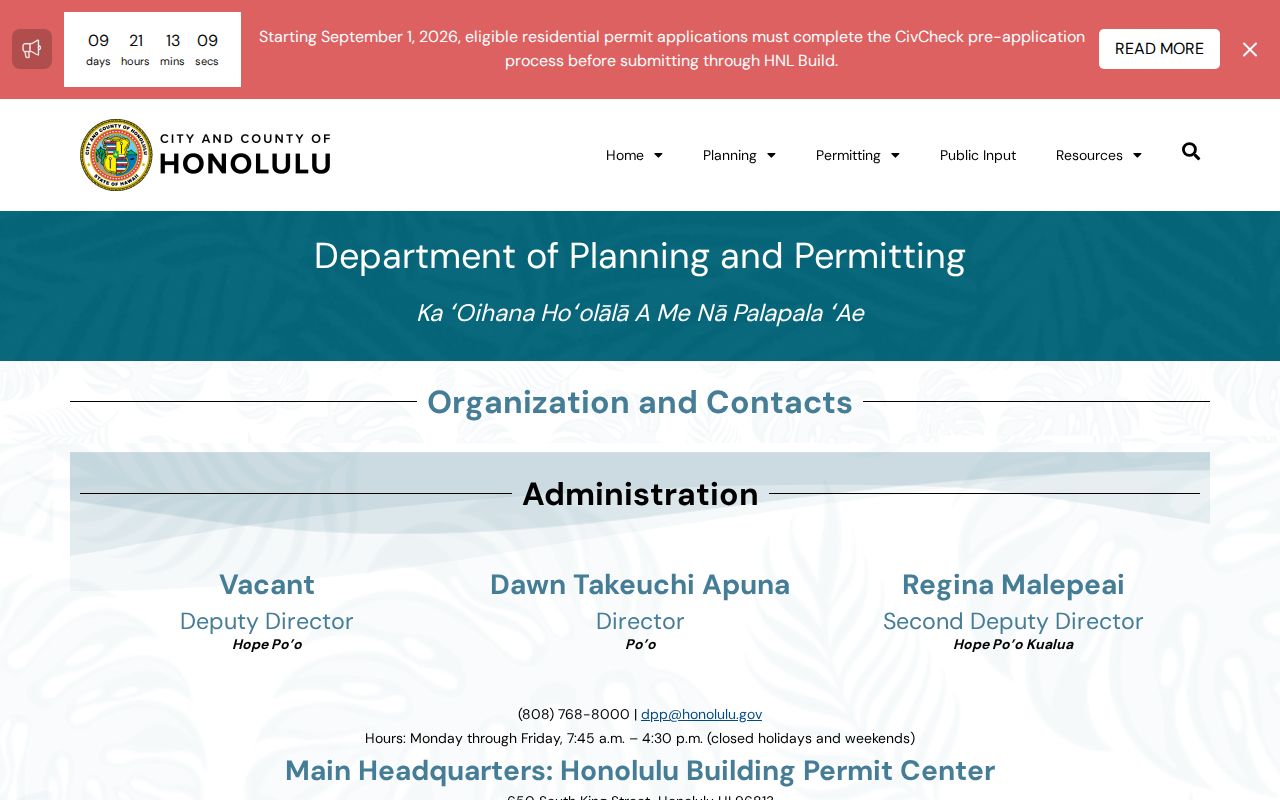
This office fallback is especially useful when a structure predates the files visible in a current permit interface.
DPP also documents address requests for vacant parcels, new or added dwellings, incorrect addresses, and legality checks. Those events may explain why a prior resident appears under a different street form.
Ewa Gentry Survey Records
The Ewa landscape has a map trail older than the modern development name. The Land Survey Division began in 1871 and reports roughly 90,000 maps in its digitization effort. Its examples include an 1887 Ewa map. Compare such a sheet with deed descriptions and current parcel geometry only when a lot, tract, survey reference, or other land bridge supports the match.
The official Hawaiʻi Land Survey map search provides the Ewa-specific route.
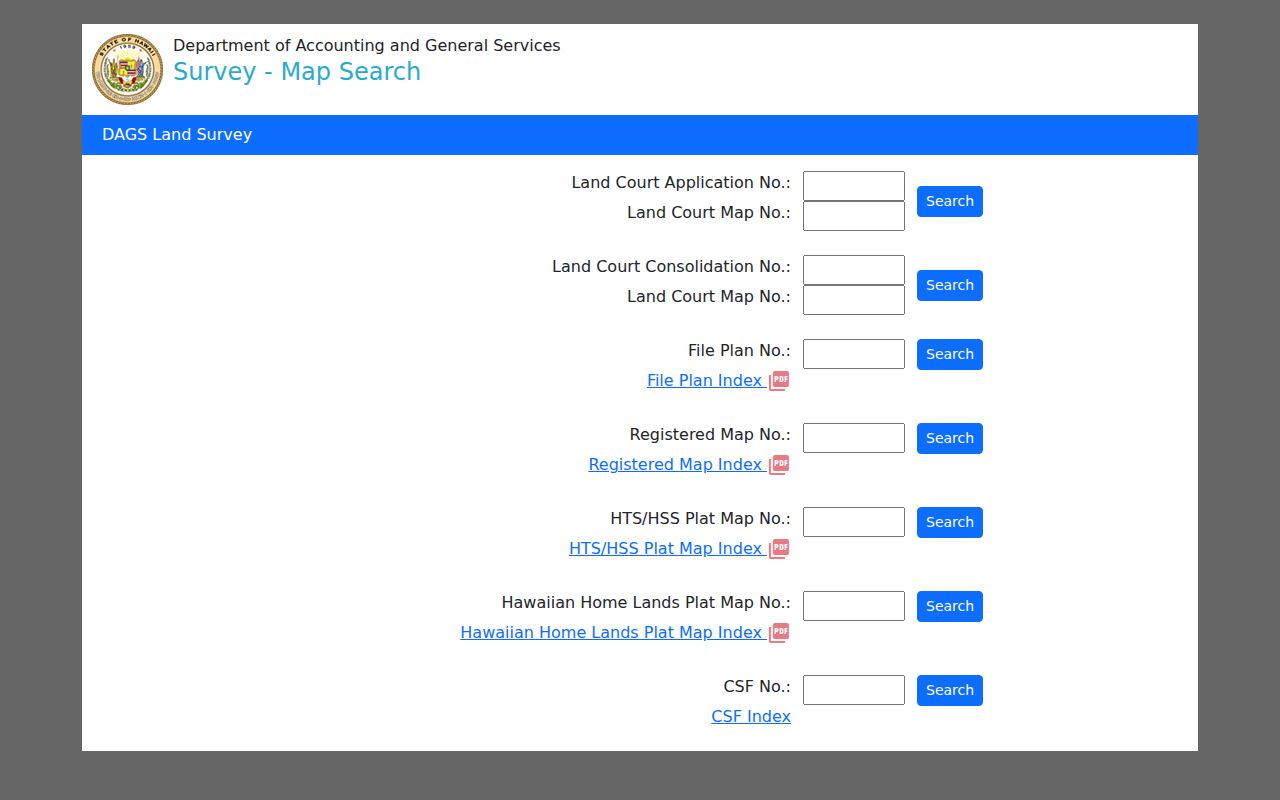
The map catalog can locate an older landscape, but it should not be overlaid with modern house numbers without supporting evidence.
Ewa Gentry Map Records Gap
No direct Ewa Gentry Sanborn sheet or complete local fire-insurance run was located. The Library of Congress guide and the UH Dakin collection document Honolulu-centered coverage. UH also notes that a 2004 flood damaged original Dakin material, while scans preserve access. That provenance matters, but neither a scan nor a Honolulu sheet should be stretched to cover an Ewa parcel.
Use the DAGS Ewa survey map, UH MAGIS cartographic and aerial holdings, subdivision plans, DPP files, and deed descriptions as the better fallback chain. A well-supported negative finding is more useful than an invented map match.
Note: No online map hit does not erase the address; it shifts the work to catalogs, survey sheets, permit files, and recorded land descriptions.
Ewa Gentry Household Records
Owners are only half the question. Dated directories may identify a name, address, work, spouse or relative, and household notation. Census schedules can place a household in a district, while newspapers, probate indexes, and cemetery sources can explain when a person left the trail. The full publisher and shelf history belongs on the Ewa Gentry city directory page.
Pair the sources as a process: choose a directory year, copy its exact address and locality, compare the next edition, then check the closest released census for the surname and district. Follow a death or move with UH/HSA newspaper indexes and HSA probate or will indexes. Cite the directory page, census details, newspaper title and date, or archive volume that supports each claim.
- Keep the source's original Ewa, Ewa Beach, Honolulu, or other locality wording.
- Compare two adjacent directory editions before treating one entry as stable.
- Match relatives, work, address, and district rather than relying on surname alone.
- Connect the household to the parcel only through a documented map, deed, permit, or legal-description bridge.
Lawful use. Research previous residents for house history, genealogy, or other lawful personal purposes. Never harass or track a living person.
Ewa Gentry Archive Records
An obituary can identify relatives, former places, or a date, but its place wording might name a residence, death site, funeral home, or family connection. Search the UH Bob Krauss index for English-language Hawaiʻi newspapers from 1840–1944 and the HSPLS newspaper guides for later runs. Then tie the result to a known relative, deed, probate file, or original address phrase.
HSA's historical indexes include probate for 1848–1915 and wills for 1852–1915. New Digital Archives work announced in January 2026 added 64 index volumes covering hundreds of thousands of references. An index is still a pointer. The archive research room or an archivist may be needed to inspect the original file.
Label Ewa Gentry Matches
Previous residents should be graded by evidence. “Recorded owner” means a deed supports the interest. “Assessed owner” means RPAD displayed the name on the retrieval date. “Directory occupant” means a dated volume linked the name and address. “Possible household match” should remain tentative until a second source connects the person, date, and place.
When an agency record is not online, Hawaiʻi's UIPA request guidance supports a focused request to the actual custodian. Give a record type, address or TMK, and date range. Do not ask broadly for all residents. A no-result can mean the index, spelling, date, locality, or access route was wrong, not that the person was absent.
Keep a simple worksheet with the historical name, source date, original place label, normalized current place, street or road, lot and block, TMK, document number or book and page, repository, and confidence level. Conflicts belong in the notes. That audit trail lets another researcher repeat the search and keeps a likely match from hardening into an unsupported fact.