
Ewa Gentry Directory Collections
Ewa Gentry has no stand-alone municipal series. Its historical directory spine belongs to Honolulu, Oʻahu, and the Territory or State of Hawaiʻi. Search those wider headings, then use Ewa as the locality inside an entry. The UH directory bibliography identifies principal runs and shelf references. The table separates printed volumes from indexes that can confirm a household.
| Collection | Years | Where Held | Access |
|---|---|---|---|
| Husted directories | 1880-81 through 1910, with gaps | UH Mānoa H&P | Shelf or microform |
| Polk-Husted and Polk | 1911-1941/42; resumes 1947/48 | UH, libraries, selected digital copies | In person, microfiche, or preview |
| Island directories | 1954-1987 | UH H&P and libraries | Confirm current holdings |
| HSA name indexes | Various runs, 1826-1929 | Hawaiʻi State Archives | Online index and research room |
The Honolulu Almanac and Directory, Honolulu Blue Book, Blue Book of Hawaii Nei, and Thrum's Hawaiian Annual add years outside the main chain. None is complete. A missing person may have lived beyond the canvass, used initials, appeared under another spelling, or been filed under an older place name. Record the volume and page even when an entry seems exact.
Ewa Gentry Directory Year Runs
Hawaiian directories begin in 1880-81, followed by editions in the late 1880s and 1890s. Husted published from 1896-97 into 1910. Polk-Husted covered Honolulu and the Territory from 1911 through 1929/30, then the City and County of Honolulu and Territory through 1940/41. Polk continued in 1941/42 and again from 1947/48. Island directories span 1954-1987.
| 1880-1910 | Early Hawaiian and Husted volumes |
|---|---|
| 1911-1941/42 | Polk-Husted and Polk runs |
| 1947/48 onward | Honolulu county continuation |
| 1954-1987 | Island directory series |
This timeline is not a promise that each edition is online or on one shelf. The bibliography lists Honolulu call number DU621.P6, island directories at DU621.P64, and microfiche D70144. Confirm placement before a visit.
Finding Ewa Gentry Directory Names
Modern Ewa Gentry grew from later planning and subdivision records. Older entries may use Ewa, Ewa District, Oʻahu, Honolulu County, a plantation term, or a legal land description. Searching only the modern community name can erase the decades a family historian wants to reach.
The DAGS Land Survey project supplies a geographic bridge. Its collection began in 1871, contains roughly 90,000 maps, and includes an 1887 Ewa map. Compare an old label with a deed description or dated map. Never force a present street name onto an old sheet.
Reading Ewa Gentry Directory Entries
A directory entry compresses a household into a few marks. The 1933 Polk-Husted volume shows names, occupations or employers, street addresses, rear-address or household marks, and widow notation. Its visible examples are from Honolulu, not Ewa Gentry, but they show how the publisher encoded facts. Read the key from that exact edition first.
| Name | Listed adult, often with initials or variants |
|---|---|
| Occupation | A useful same-name separator |
| Address | House number, street, locality, or residence mark |
| Household clue | Spouse, relative, rear address, or publisher symbol |
| Widow notation | A lead toward obituary or probate records |
- Criss-cross directory
- A section arranged by street address instead of surname.
- Householder index
- A list keyed to the person treated as the main listed household member.
- Abbreviation key
- The volume's legend for short forms and symbols. Save it with the entry.
Inspect the digitized 1933 directory entry format.
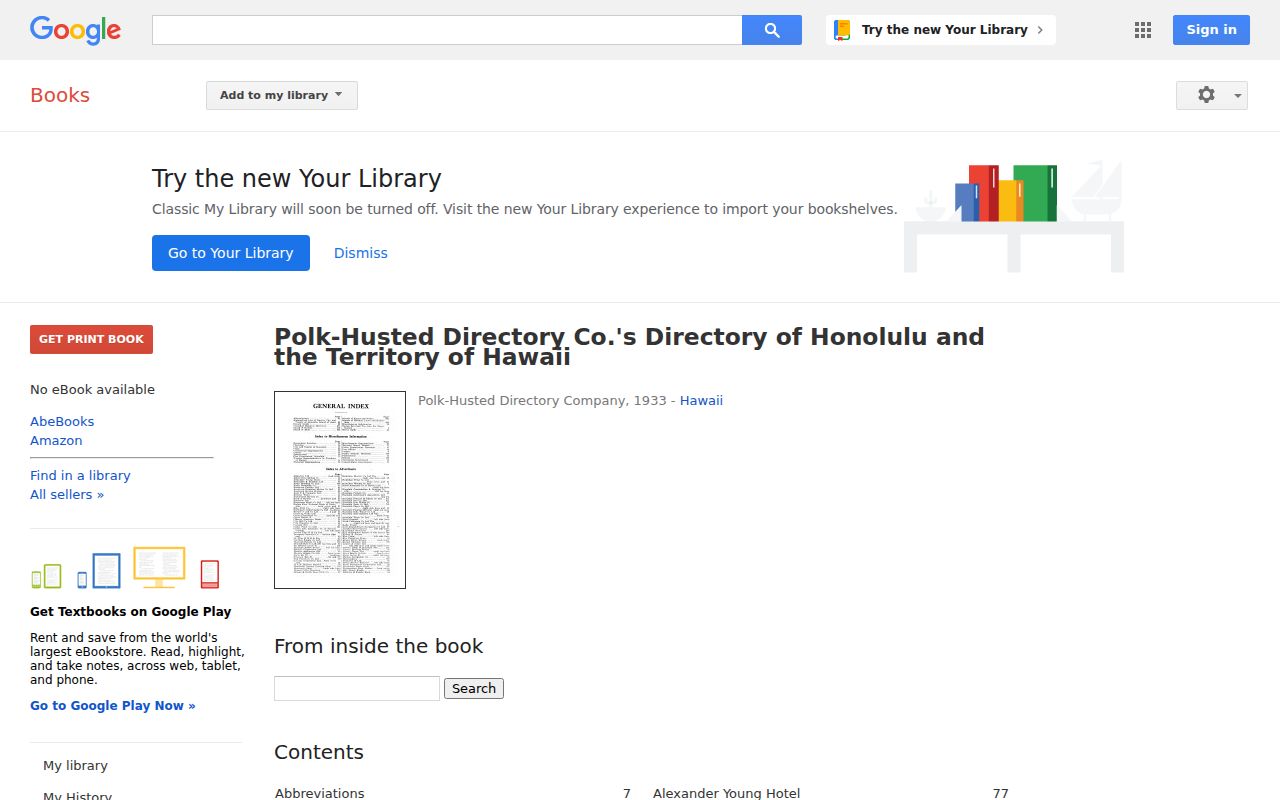
The compact page makes clear why the key, adjacent entries, and exact citation belong together.
Ewa Gentry Directory Archive Names
The Hawaiʻi State Archives Digital Collections connect city directories with cemetery, newspaper, Thrum, and genealogy indexes. Index groups include marriages from 1826-1929, divorces from 1848-1929, probate from 1848-1915, and wills from 1852-1915. An index points to a file; it is not the whole record.
January 2026 announcements describe 64 digitized index volumes and hundreds of thousands of references. More names can be found from home, but an archivist or original-file request may still be required.
Open the official archive collection page.
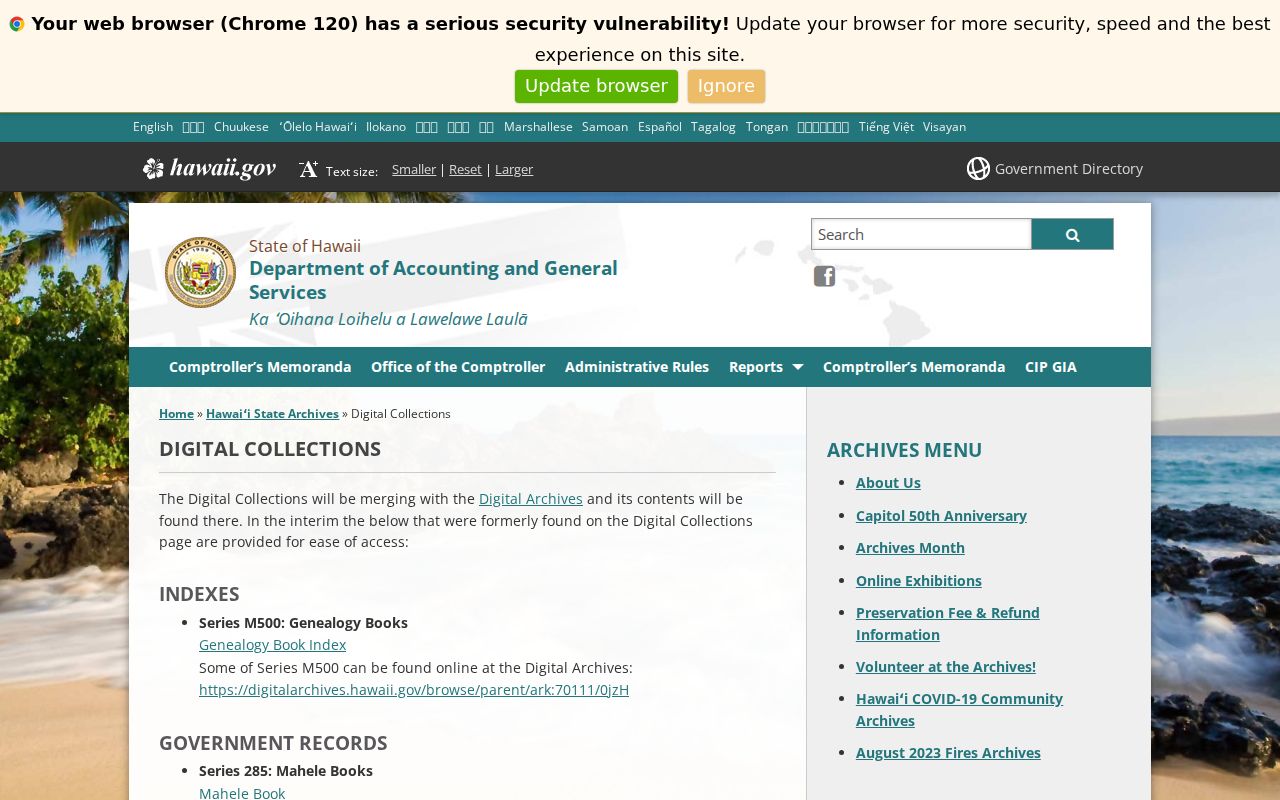
The collection groups show why a name should move from index to underlying record.
Ewa Gentry Directory Library Stops
The Ewa Beach Public and School Library is the closest start for computers, newspapers, and HSPLS genealogy tools. It opened in 1971 on the James Campbell High campus. Ask about directory, phone-book, and yearbook holdings rather than assuming a reverse directory exists.
UH Mānoa's Hawaiʻi and Pacific Collection holds directories, newspapers, maps, and the Bob Krauss index. That index covers English-language newspapers from 1840-1944 in 22 card-file drawers.
Review the UH directory bibliography before visiting.
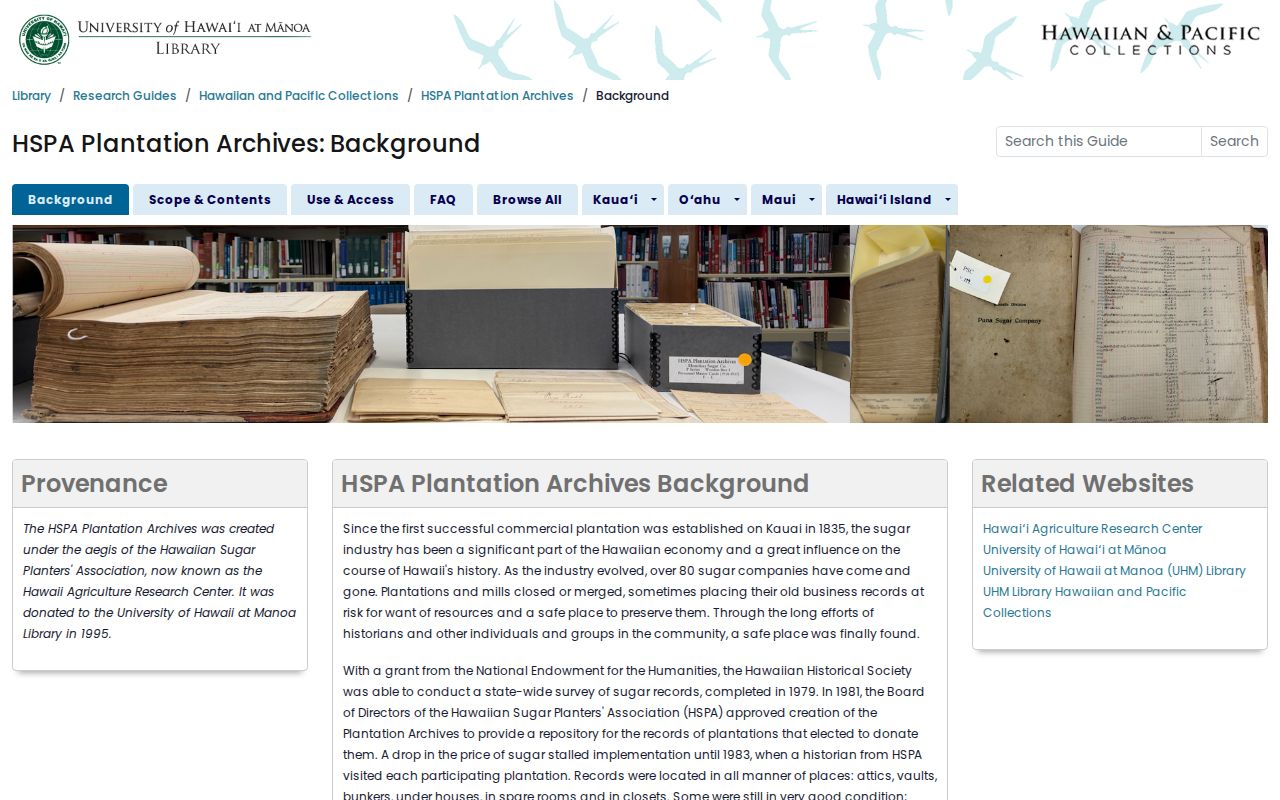
The publisher runs and call numbers help make a shelf search focused and repeatable.
Ewa Gentry Directories Meet Newspapers
A household may vanish because it moved, changed its listed name, or went unlisted. The HSPLS newspaper guide covers the Advertiser, Star-Bulletin, Star-Advertiser, microfilm, and the Hawaiʻi Newspaper Index beginning in 1989. UH's bibliography also identifies birth and marriage notice microfilm for 1850-1950 and an obituary index for 1836-1950.
Search the surname with an Ewa place term, then cite title, date, and page. A notice remains a lead until its dates and relationships match the directory household.
Ewa Research by Appointment
The Hawaiian Historical Society, founded in 1892, offers an appointment-based reading room and paid research service. Provide a full name, variants, date span, Ewa locality, and any volume citation.
Check the Society's research visit instructions.
The appointment process rewards a narrow, well-cited question over a broad name request.
Ewa Directory Maps and Gaps
The identified UH Dakin and Library of Congress Sanborn holdings center on Honolulu. No direct Ewa Gentry Sanborn sheet was located. The stronger Ewa bridge is the 1887 Land Survey map, followed by legal descriptions and planning files. UH also notes that a 2004 flood affected original Dakin material while scans remain, so cite whether a scan or original was viewed.
Modern project terms can also bridge old and new sources. Ewa by Gentry Development Plan, Sun Terra, Sunrise Gentry Homes, and Ewa Gentry Drainage appear in planning or agency records from the development era. Search those exact phrases in catalogs and newspaper indexes. They may connect an older Ewa locality to a later subdivision, but they still do not prove that an individual occupied a specific home.
A map comparison should preserve scale, date, creator, and repository. Note whether a boundary is a tax parcel, census place, postal area, planning district, or neighborhood-board district. Those lines serve different purposes. A historical city directory locality may overlap several of them without matching any one modern boundary.
Directory research also needs a name strategy. Search a full name, initials, spelling variants, Hawaiian place forms, and household markers. Then compare the abbreviation key for that exact edition. A shortened occupation, widow notation, rear-address mark, or household reference may change how an entry should be read, and a surname alone should never be used to infer identity.
When a catalog result is unclear, contact the holding library with the edition year, publisher, locality, and page sought. UH, Hawaiʻi State Library, Hawaiʻi State Archives, and Hawaiian Historical Society each hold different parts of the trail. A precise request gives staff a better chance of locating a noncirculating volume or related index.
Photograph or transcribe the title page and abbreviation key with the entry when repository rules allow. That context identifies the edition and keeps a later reader from expanding a short form incorrectly.
Trace Ewa Families by Directory
A sound Ewa Gentry city directory trail keeps each step dated. Begin with one strong entry, then work both ways. Pair directory years with available census or tax-list years, but do not convert a broad Ewa locality into a present parcel without a deed or map bridge.
- Capture spelling, address, marks, page, edition, and publisher.
- Check editions immediately before and after the find.
- Use a criss-cross section only after checking its key and scope.
- Compare a released census, tax list, newspaper, or probate index.
- Close the chain with a dated deed, obituary, cemetery entry, or archive file.
For modern address-keyed evidence, use the Ewa Gentry street directory. A city directory is a dated claim about its publication year, not proof of a current address.
Disappearance from one volume has several possible explanations. Check whether the publisher skipped a year, changed its coverage, or moved the person under initials. Then search the obituary and marriage-notice indexes, probate and cemetery collections, and the next available census. A deed or probate file can supply the legal place bridge that a directory lacks.
Minimum citation details make the result useful to the next researcher: repository, collection or publisher, edition year, page, exact printed name, address or locality, and the date the item was viewed. For archive indexes, add the index volume or identifier. For newspapers, add title, date, and page. These details let another person test the match instead of repeating the whole hunt.